Story
Mother-of-Pearl and Silver Underfoot: The Ottoman Nalın
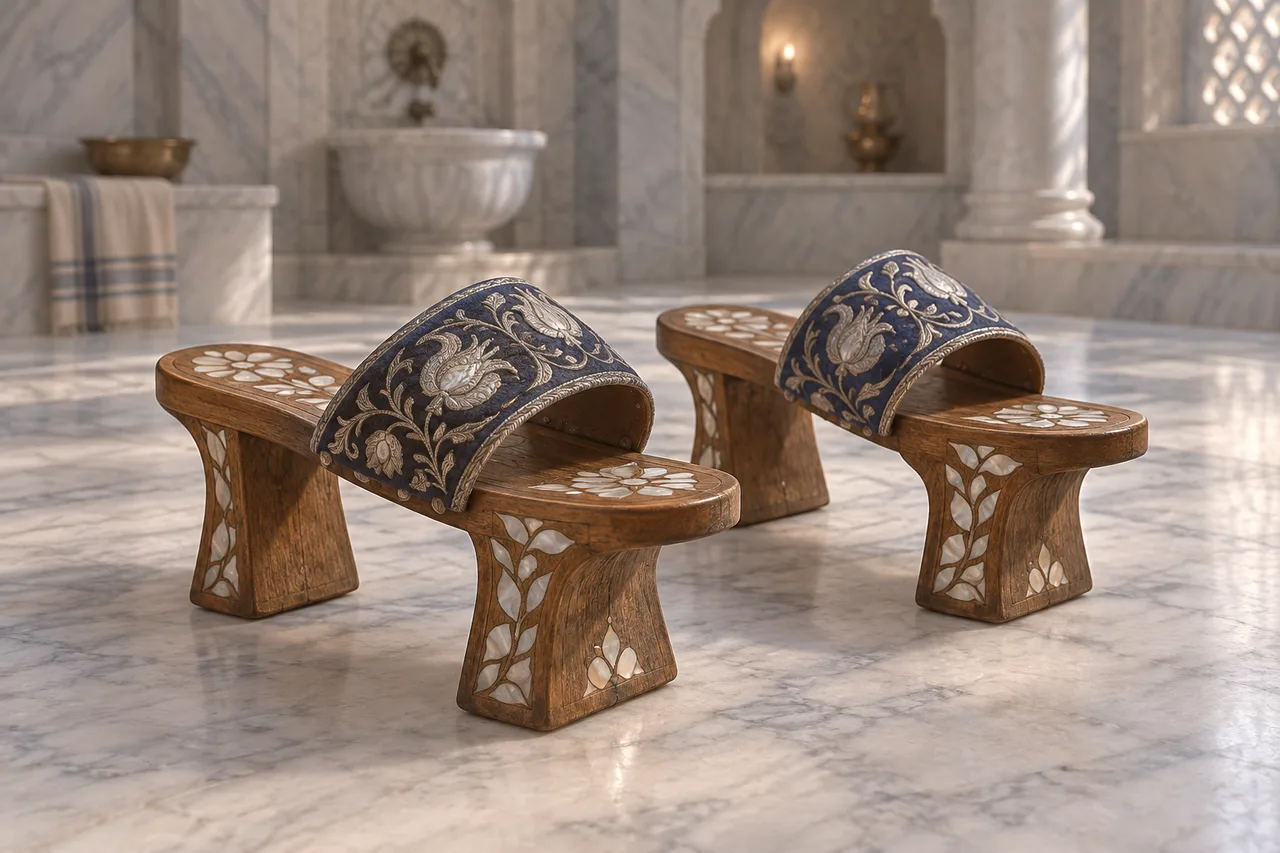
Mother-of-pearl and silver invite the close attention we might give a favourite jewel. On Ottoman nalın, that pleasure belongs to an unexpected accessory: raised wooden clogs worn in the hammam. Their decoration could include precious metals, mother-of-pearl, embroidery and pearls, giving footwear made for a practical purpose the appeal of a carefully adorned personal possession. For a reader drawn to beautiful objects, the fascination lies in that combination of usefulness and display. SFO Museum
Height with a purpose
The raised soles of nalın kept the wearer’s feet above wet bathhouse floors. Their bases were generally carved from solid hardwood, while a strap of leather or fabric crossed the foot. The basic arrangement gave the shoes a clear job to do, and it also offered several places for ornament: the wooden body below and the strap above. SFO Museum
Silver, gold, mother-of-pearl and tortoiseshell were among the materials used to embellish the bases. Straps could carry embroidery, pearls and stones. Height itself had a social meaning: alongside the quality of the decorative materials, it communicated the wearer’s prestige. A pair could therefore be read through both its silhouette and its smaller details. The first impression and the close view each had something to say. SFO Museum
Blue cloth, silver thread
A Turkish pair in the British Museum, accession As.1553.a-b, makes the meeting of materials especially vivid. Wooden bodies are inlaid with mother-of-pearl, and leather straps are covered in blue cloth embroidered with silver thread. The silver here belongs to the embroidery, giving the textile its own part in the decorative composition. Wood, shell, leather and cloth all contribute to the character of the same accessory. British Museum, bath clogs
The two clogs measure 25 and 26 centimetres high, respectively. Those dimensions make their height tangible: beside the delicacy of the thread and inlay, the scale feels almost theatrical. Their museum history reaches back to 1865, when they entered the collection through Henry Christy’s bequest. That date marks a moment in the pair’s passage into the collection. British Museum, bath clogs
There is a particular charm in the balance of blue cloth and silver thread. To the modern viewer, it can suggest the considered relationship between a garment and a jewel. Here, that relationship is contained within the footwear itself, with the strap contributing as much to our impression as the decorated wood beneath it.
In company, and in the bridal trousseau
The hammam supplied a social setting for such display. An educational exhibition by the Textile Museum, hosted by George Washington University, describes women showing embroidered bathing textiles, raised wooden clogs and jewellery there. Beautifully worked towels and wrapping cloths belonged to this setting too; embroidery could express a family’s wealth and a woman’s skill. The clogs belonged alongside these textiles and jewels, each contributing to how a woman presented herself. The Textile Museum, FSG Culture
The wrapping cloth, or bohça, helps connect those belongings. These square cloths carried towels to the hammam and protected a bride’s trousseau during its transfer to her new home. Their public use made the quality of their decoration significant. Placed beside the story of nalın, they bring textiles and footwear into the same world of useful possessions that could also be admired. The Textile Museum, FSG Culture
Bridal customs gave decorated clogs a further significance. Ottoman Turkish brides traditionally visited the hammam before their weddings, taking bathing equipment that included towels, a bowl for pouring water and nalın. Wealthy brides frequently received elaborate pairs as wedding gifts. SFO Museum also identifies nalın as an important element of a woman’s dowry chest. Bata Shoe Museum, SFO Museum
One nineteenth-century Ottoman pair featured by the Bata Shoe Museum was donated by Sonja Bata in 1985. Its exceptionally fine inlay leads the museum to suggest that it may have been made for a bride. That possibility adds a tender association to the object, while its bridal use remains uncertain. We can appreciate the fine work while leaving that part of the pair’s earlier life open. Bata Shoe Museum
A figure in a watercolour
A Turkish watercolour dated approximately 1790 offers another way into this world. Folio 11 of Costumes Turcs Vol II, held by the British Museum, depicts a woman at the baths wearing high brown nalın, green trousers and a white blouse. The image places the elevated footwear within a dressed figure, giving us a different view from the surviving objects. British Museum, costume painting
Seen alongside the blue cloth and silver embroidery of the museum pair, that figure draws attention back to the person wearing the accessory. For a reader interested in adornment, the pleasure is in seeing how much expression a useful object can hold. The eye returns to the strap, then to the decorated wood: silver thread and mother-of-pearl each offering a reason to linger.