Story
The Silver Silk of Trabzon: Unraveling the Ancient Art of Kazaziye
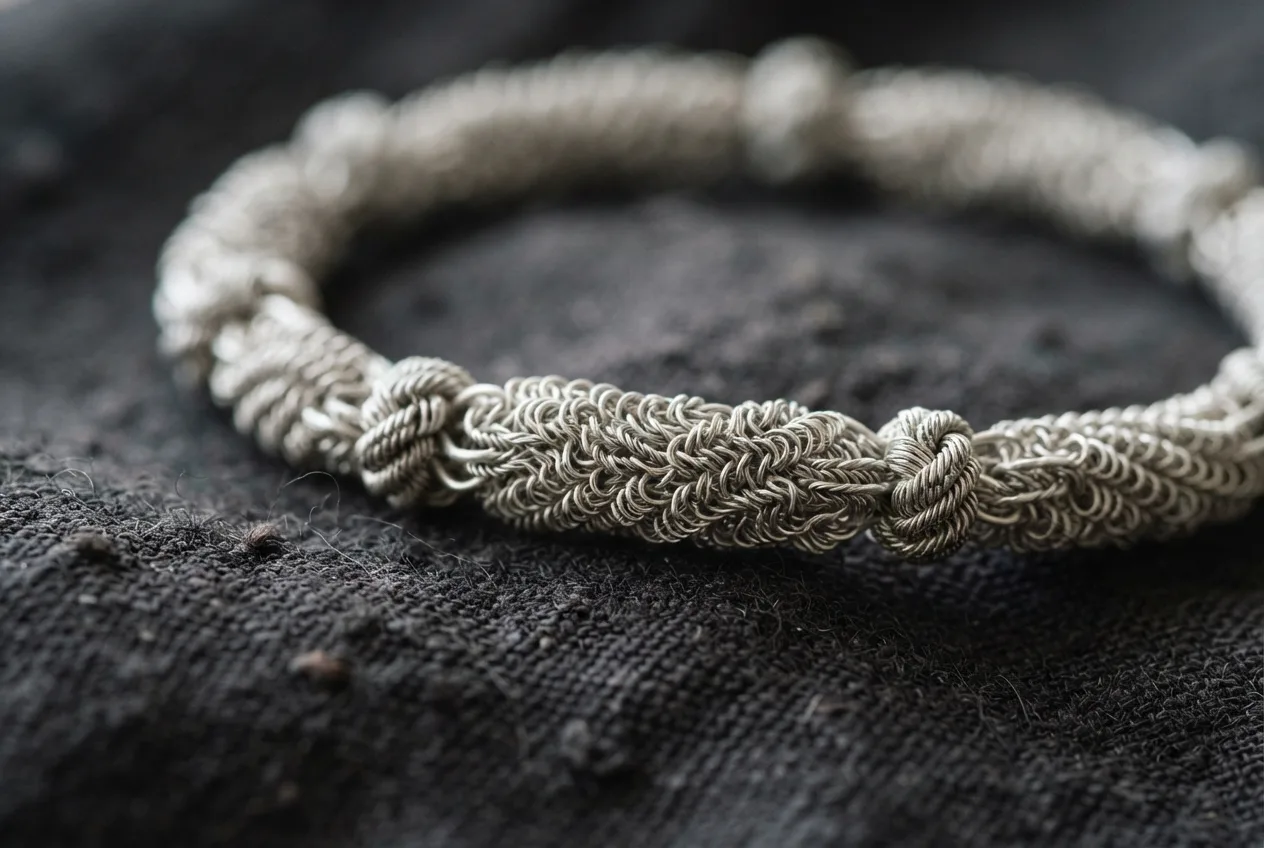
In the lush, coastal city of Trabzon, nestled along the shores of the Northern Black Sea, a mesmerizing transformation takes place in the hands of quiet artisans. They take cold, unyielding precious metal and teach it to flow like fabric. This is the ancient art of Kazaziye, a jewelry-making tradition that marries the brilliant gleam of precious metals with the soft, comforting flexibility of textiles. To hold a Kazaziye bracelet or necklace in your hands is to hold a literal paradox: it carries the substantial, grounding weight of pure 1000-karat silver, yet it drapes across the collarbone or wraps around the wrist with the supple, yielding grace of a woven silk ribbon. These pieces are not merely decorative ornaments; they are a tangible testament to thousands of years of evolving human craftsmanship and unyielding patience.
Echoes of Antiquity
The story of Kazaziye stretches deep into the bedrock of human civilization, back to a time when metallurgy was first being discovered. Historical and archaeological accounts trace the earliest roots of this wire-weaving technique back to the Mesopotamian and Lydian civilizations around 2800 BC. In fact, artifacts bearing a striking resemblance to modern Kazaziye work have been identified by scholars among the legendary treasures attributed to King Croesus of Lydia. It is a craft born in the earliest days of antiquity, when humanity first began to shape gold and silver into objects of personal adornment and cultural significance.
Centuries later, during the magnificent heights of the Ottoman Empire in the 16th and 17th centuries, the craft experienced a glorious renaissance. The profession, known then as kazazlık, spread widely through diverse Anatolian cities such as Erzincan, Sivas, and Van. In the opulent, highly cultured palace circles, master artisans used their unique silver wire to embellish royal caftans, decorate women’s woven shawls, and create intricate, sweeping tassels for prayer beads and ornate belts. Today, however, the survival of this ancient technique is almost exclusively guarded by the dedicated master artisans of Trabzon.
Spinning Silver onto Silk
The enduring magic of Kazaziye lies in its extraordinary raw materials and the astonishing delicacy of the preparation process. The journey begins with pure, 1000-karat silver or rich 24-karat gold. The raw metal is carefully drawn out into an impossibly fine wire, measuring merely 0.08 to 0.18 millimeters in thickness—a dimension roughly equivalent to a single strand of human hair.
Because metal this delicate and microscopic cannot be woven on its own without snapping, it requires a hidden core to provide structural integrity. Artisans use a traditional hand-cranked spinning wheel to tightly and flawlessly wind this fine silver wire around a single, sturdy thread of silk or nylon. This meticulous, spiraling wrap is executed entirely by hand, strictly avoiding any modern power tools that might otherwise strip the craft of its soul. Once the wrapping is complete, the thread becomes a specialized wire-yarn, reaching a total thickness of just three to five millimeters. This hybrid material inherently possesses a natural matte finish, granting the finished jewelry a distinct, beautifully vintage elegance.
The Architecture of the Weave
With the silver yarn painstakingly prepared, the true architectural work begins. Every Kazaziye piece is crafted through an intricate, deliberate series of knots and weaves using only simple hand tools like crochet hooks, knitting needles, and precision tweezers. Because the entire process relies entirely on human skill, muscle memory, and artistic vision, mass production is an absolute impossibility. Machine-made imitations instantly reveal themselves through sterile, excessive symmetry, whereas authentic Kazaziye proudly carries the slight, beautiful natural variations inherent to the human hand.
Artisans employ a rich vocabulary of traditional weaves to build their pieces. The “fishbone” (a tight, chain-like weave) provides the primary structure for most necklaces and heavy bracelets. The “surge” technique is ingeniously utilized to seamlessly join different sections of the jewelry without visible seams, while “ajur” offers a delicate open-weave pattern that grants flexibility, movement, and lightness to the piece. Another hallmark of the craft is the “top weave,” where the silver wire is wrapped around a small wooden or plastic core to create perfectly spherical, textured beads. These complex configurations frequently include symbolic knots, such as the famous Shemse motif, beautifully known as the Love Knot.
A Wearable Heritage
Today, the aesthetic appeal of Kazaziye extends far beyond its fascinating historical origins. The resulting jewelry is celebrated globally for its surprisingly lightweight nature, making it highly advantageous and comfortable for everyday wear. The natural flexibility of the silver-wrapped silk allows the pieces to move organically with the wearer, conforming perfectly to the body’s contours. The craft is most commonly seen in exquisite cylindrical bracelets, minimalist woven necklaces, elegant drop earrings, and highly collectible prayer rosaries adorned with heavy, intricate silver tassels.
To preserve the longevity and brilliance of these remarkable pieces, simple but specific care is required. The pure silver naturally undergoes oxidation over time due to exposure to the air, a process often mistaken for tarnishing but which actually deepens the antique character of the metal by adding a rich patina. Direct contact with harsh perfumes, cosmetics, and highly humid environments should be carefully avoided, and gentle cleaning with a soft, dry cloth ensures the complex weave remains pristine.
Kazaziye is not simply a method of making jewelry; it is a profound cultural identity wrapped tightly in silver wire. In a modern world increasingly dominated by rapid, automated manufacturing, the quiet artisans of Trabzon continue to thread their needles, passing down a meticulous legacy that has remarkably endured for millennia.