Story
Telkari: The Silver Lace of Anatolia
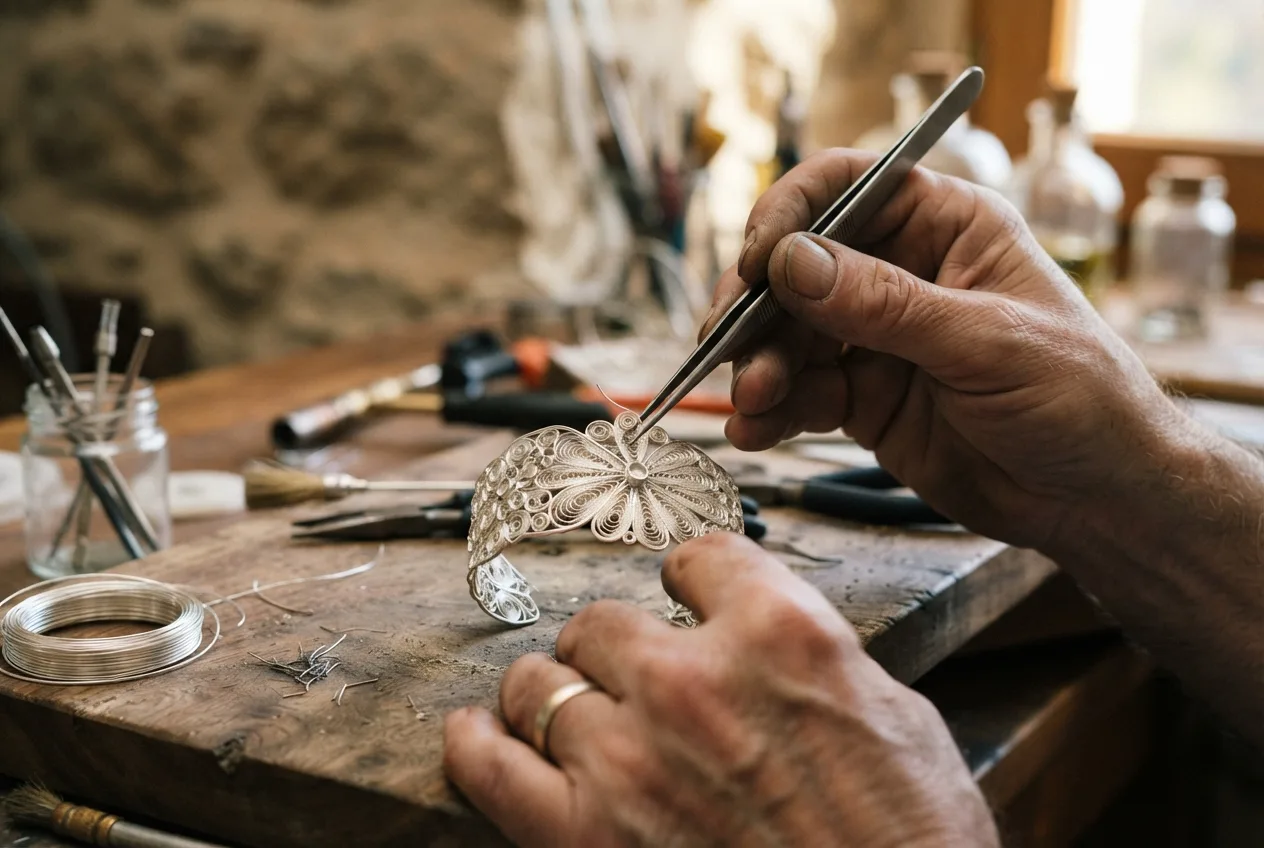
An Art Form Woven from Threads
In the historic quarters of Mardin, where the cobblestone streets whisper tales of centuries past, thrives a craft that demands more than skill; it requires a near-meditative patience. Telkari is the traditional art of creating jewelry from remarkably fine metal threads. The term is derived from the Arabic words “tel” (fine metal thread) and “kâr” (work), a perfect description of a process that turns solid silver into delicate, lace-like structures.
The Technical Precision
Creating a piece of telkari begins not with a sketch, but by melting high-purity silver. The metal is drawn through steel plates to create wires as thin as one millimeter. This is where the true test of the artisan begins. Craftsmen often utilize a frame called a “muntaç” to hold the intricate motifs in place during the soldering process. Using tweezers and pliers on a walnut wood workbench, the jeweler meticulously shapes each wire, transforming raw metal into complex, web-like patterns.
Nature as Inspiration
Telkari is far more than mere decoration; it is a narrative told in silver. Traditional motifs frequently draw inspiration from the natural world—flowing lines that mimic the curves of leaves, the geometry of flower petals, or the freedom of birds in flight. Protective symbols, such as the “nazar” (the Evil Eye), are also commonly woven into these designs to provide the wearer with a sense of security. This is the enduring magic of the craft: the ability of the master to breathe life into silent metal, imbuing it with layers of cultural meaning.
A Legacy of Skill
Historically, the skills required for telkari were passed down through family lineages from master to apprentice, preserving the integrity of the craft for generations. Today, Mardin remains a pivotal hub for this tradition. The production of every piece is intensely labor-intensive, involving everything from precise soldering to a final bleaching process in an acidic solution to restore the silver’s natural luster after oxidation. While contemporary designers have begun to experiment with new forms, the essence of telkari remains untouched. It is a craft that demands sharp eyesight, steady hands, and a profound respect for the heritage that connects us to the history of Anatolia.